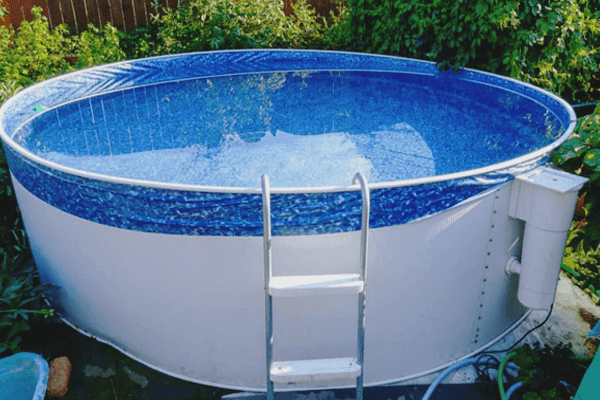
The protective layer of an above-ground pool is basically thinner than the one of an in-ground pool. In case of a water leak, draining out all the water to patch the leak can be time-consuming and labor-intensive. It can quickly be done by not draining the pool instead. You might be thinking about how to patch an above-ground pool without draining it.
The procedure of patching the pool is simple. In convenience stores or hardware shops, you will find vinyl patching kits. After identifying the leakage, you will be able to patch the part with the glue. You can then dive into the pool and patch it up.
Patching the pool without draining water might sound complicated. You might think the presence of water might dilute the glue. But the kit glue is usually water-resistant.
Why Does Leakage Happen In Pools?
Contents
The leading cause of leakage in the pool is the water pressure. Also there are some other reasons like being poked by a sharp object.
Over time, the lining of the pool gets weak. The friction in the above-ground pool is higher than in the ground pool. This friction causes the lining to get weak. And ultimately, the leakage takes place.
The leakage hole can be significant. But when the leak happens due to poking, it can be a tiny hole.
How To Find If There Is Leakage In The Bottom?
Checking the water level of the pool will let you know that there is a leakage.
In general, due to evaporation from sunlight, the loss of water might be .75 inches to 1 inch. For a leak in the bottom, the water loss will be more than 2 inches. The water loss will be more because the water pressure in the bottom is more considerable in comparison.
How To Find There Is A Leakage In The Wall?
If there is a tiny leakage in the wall, the water loss will be between 1 inch to 1.5 inch.
As in the pool wall, the water pressure is less than the bottom. So, the water loss will not be that much. Also, in an above-ground pool, the leaking in the wall might be visible from outside.
Check the wall from all around. This will help you know any major leakage, and you might be able to patch it from outside. However, repairing the wall leakage from the outside is not as efficient as fixing it from the inside.
Patching Up The Pool With Water
There are a few steps to follow. Following the steps below, you will be able to complete the patching and get a solution for a while, but it won’t be permanent.
Step 1: Identifying The Leakage
Before you work on the patching, you will need to identify the leak. The water level will help you to work on that. But at this time, you will need to stop the water refilling pump.
Diving in the water with swimming goggles will allow you to find the specific leaking point.
Step 2: Buying The Patching Kit
In the market, there is a particular type of Vinyl Patching Kit available. This allows you to patch the leak underwater. The glue that comes in the kit is water-resistant. But that needs to be used properly.
While buying the kit, ensure checking the manufacturing date and expiration date. An old or expired kit will have defective glue. This will not be able to hold in the water pressure.
Step 3: Preparing The Leak Hole
The hole that needs to be patched requires some preparation. With a cloth or sponge scrub, clean the spot. Make sure to clean an extra 2 to 3 inch around the hole.
Cleaning is important, as the body oil deposited in the pool ground will resist the glue from settling.
Step 4: Scrubbing
With the help of a steel wool scrub the leak area carefully. This creates a rough spot. This roughness helps to hold the glue properly. It makes some space for glue.
Step 5: Cutting The Patch
The vinyl kit will have the patch in a large piece. You will need to cut the patch as per to your need. Always cut with some extra inches.
It is not essential to have a round patch. But always curve the edges. This helps in strengthening the grip and also in water pressure, the patch does not detach easily.
Step 6: Using Glue
You will not put the glue on the pool liner. Instead, you will have to glue the patch.
With the steel wool, give a gentle rub and put the glue. Now, before going into the water, fold the patch and hold it with a good grip. Though the glue is water-resistant, it is ideal to avoid water contact as much as possible.
Step 7: Patching Up
Put the patch on the hole. Get started from the center and work your way outside. Apply gentle pressure with your finger and make sure to seal all the edges.
Step 8: Resting Period
You will need to give the patch some resting time. The Vinyl Patching Kit comes with a manual. This manual will let you know the standing time.
During this resting period the pool water has to be as stable as possible. Do not swim between this time as the tide will loosen up the glue. Also, you will need to switch off the pool pump and filtration system.
After getting done with the standing time, you will have a patched-up pool without any leakage.
Points To Remember
Here are some important points you should not forget while doing the patching.
- If you are patching an above-ground pool wall, remember to repair it both from inside and outside. This gives a good grip.
- Always remember to clean the patching area before patching up. Otherwise the oil deposition will create resistance on the glue.
- Use steel oil gently. Otherwise, you might end up creating more leakage.
- Change the pool lining as soon as possible. Patching is not a permanent solution as the water pressure of the pool will disintegrate the patch in the long run.
- Do not use duct tape or scotch tape to mend leakage. Without doing any good, it will harm your pool. Also, these tapes can not take the water pressure. Within a few moments they might come off.
Taking Care Of Above Ground Pool
By taking care of the pool, you can prevent the leakage from happening in the first place.
Take off any jewelry before getting into the pool. Also, cover the pool with a pool cover when not in use. It will protect the pool from leaves and debris.
Clean the whole pool, mainly the bottom, regularly. The build-ups in the bottom can cause disintegration of the lining and create leakages.
Final Words
Any pool leakage will tamper with the pH balance. Waste of water will be another effect of leakage. In this case, patching up can help. Even though it is certainly not a permanent solution, it will help to hold on for a while.
Patching up the pool with water might sound complicated. Whereas, using a proper kit will make your work easy. Now Vinyl patching kits are available on the market. To execute the kit, you will not need any outside help. It is a one-person job, and you can easily do it yourself if you just follow this post!
